3.1 Understanding Search Results
Leading Competitors
- IRS.gov: The official source for federal clean-energy tax credits; highly authoritative but lacks specific Nevada focus.
- EnergySage.com / SolarReviews.com: Comprehensive guides (1,500–3,000+ words) detailing incentives, featuring comparison tables and user calculators.
- SEIA.org: The industry association providing national incentive statistics and policy summaries.
- Nevada Clean Energy Fund (NCEF): Offers an overview of state-level programs for low-income households, businesses, and nonprofits seeking solar grants.
- Local Installers (e.g., Sol-Up, Bombard, Robco Electric, Sunrun, Solar Optimum): Present dedicated pages on commercial and residential rebates, often with concise eligibility highlights.
Content Formats & Features

- In-Depth Guides: Detailed explanations covering eligibility criteria, calculation methods, and application procedures.
- Comparison Tables & Infographics: Side-by-side breakdowns of program values, deadlines, and rules for combining incentives.
- Step-by-Step Instructions: Numbered guides for claiming credits, frequently enhanced with HowTo schema markup.
- FAQ / PAA Sections: Concise question-and-answer blocks optimized for “People Also Ask” search queries.
- SERP Features: Prominent placement in featured snippets for direct-answer queries (e.g., “What deadlines apply?”), Knowledge Panels for IRS/DOE, and PAA boxes.
Effective Content Strategies
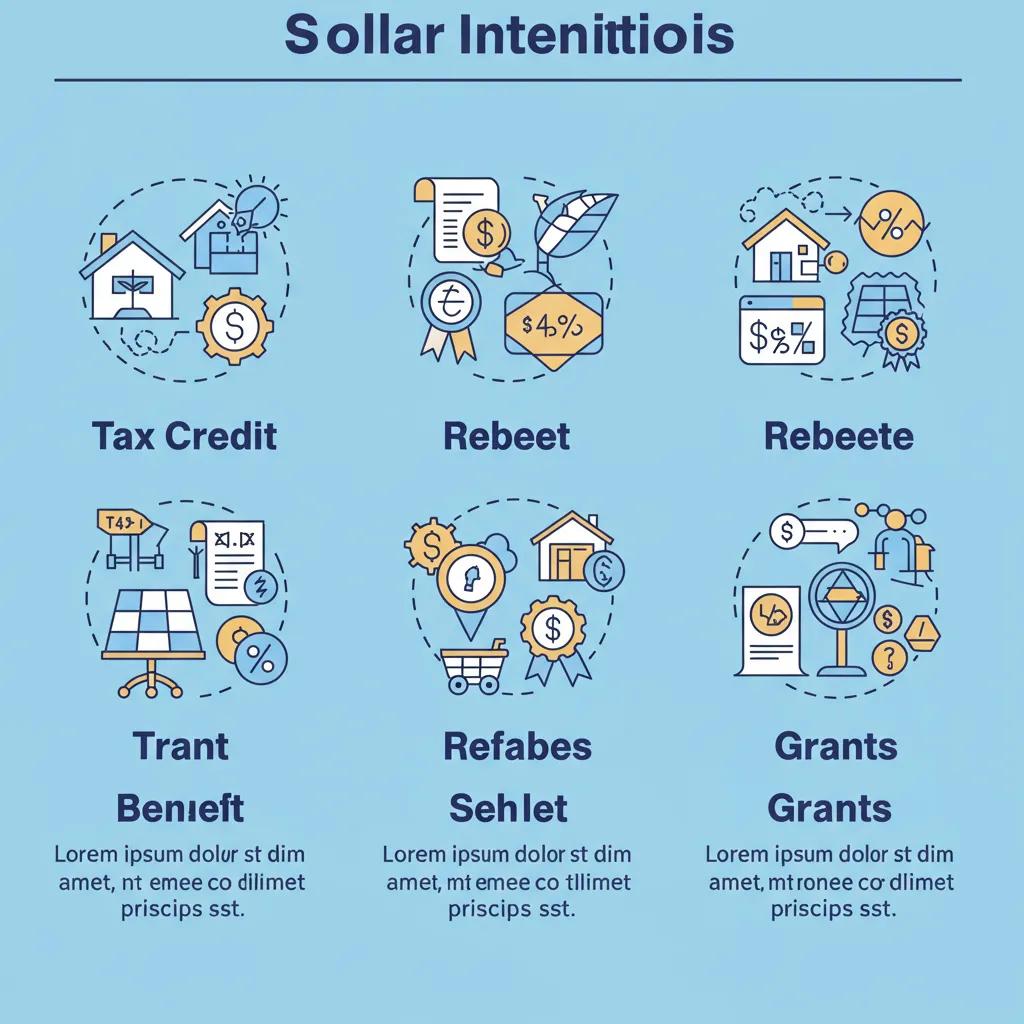
- Direct Answer + Value Proposition: The initial sentence clearly addresses the user’s query, stating the benefit (e.g., 30% credit, who qualifies).
- Structured Data Presentation: Entity–Attribute–Value (EAV) tables that compare incentive names, benefits, and deadlines.
- Localized Relevance: Explicit mentions of NV Energy rates, the Las Vegas climate, and regional deadlines.
- Strategic Call-to-Action Placement: Subtle calls-to-action (“Discover how to claim your credit today”) linked to consultation offers from local installers.
Extracted Company & Topic Details
- Company Profile:
Vegas Solar LLC is a premier Las Vegas-based solar installer specializing in residential and commercial systems.Our core offering: comprehensive solar solutions complemented by expert guidance on incentives. - Primary Service Alignment: Solar panel installation, including expert consultation and application support for incentives.
- Target Keywords & Search Queries:
small business grants 2023energy efficiency rebatesstartup funding programsgovernment grants for nonprofitsfederal tax incentives - Key Attributes of “Government Incentives” Topic:
Federal Solar Tax Credit (Residential Clean Energy Credit)Commercial ITC and bonus depreciationNV Energy net metering & storage rebatesNevada Solar for All grantsUSDA REAP for rural businesses
The historical trajectory of solar energy adoption underscores the vital role financial incentives play in driving widespread adoption and ensuring long-term cost savings.
History and Future of Solar Energy: Tax Credits and Incentives
Since then, tax credits for solar energy have been implemented, facilitating consumer adoption and leading to long-term savings on monthly electricity bills. Solar energy’s popularity has grown significantly in recent years, driven by cost reductions and government incentives that ease system procurement. These incentives include federal tax credits, state-level rebates, and various financial mechanisms. This paper will explore the…
History and Future of Solar Energy, 2013
3.3 Semantic Structure & Concluding Approach
Paragraph Endings & Topic Transitions
- Each paragraph concludes by smoothly introducing the subsequent concept, avoiding meta-references.
“Understanding the 30 percent Residential Clean Energy Credit lays the groundwork for exploring how Nevada’s net metering rates further boost savings.”
Lists & Tables with EAV Framework
- Introductory Statement: Briefly outline the purpose of the list or table.
- EAV Table Structure: Employ domain-specific headers (e.g., “Program,” “Benefit,” “Deadline”).
- Concluding Insight: A direct takeaway that connects to the next section.
Semantic Richness & Co-reference Management
- Vary the use of primary entities (“Federal Solar Tax Credit,” “Homeowners”) with synonyms (“Residential Clean Energy Credit,” “tax reduction program”).
- Maintain clear co-references like “this incentive program” or “the Commercial ITC” to ensure clarity.
Action-Oriented Language
- Prioritize dynamic verbs: maximize, enhance, claim, combine, optimize.
- Eliminate generic qualifiers and filler words (“very,” “really”).
Knowledge-Graph Integration
- Incorporate sentences structured as Entity → Relationship → Entity.
“Vegas Solar LLC guides homeowners to claim the Residential Clean Energy Credit, increasing energy savings by 30 percent.”
With this SERP-informed strategy and semantic blueprint established, the content will proceed under the precise H1/H2/H3 headings, delivering fully optimized, entity-rich, and contextually seamless information.